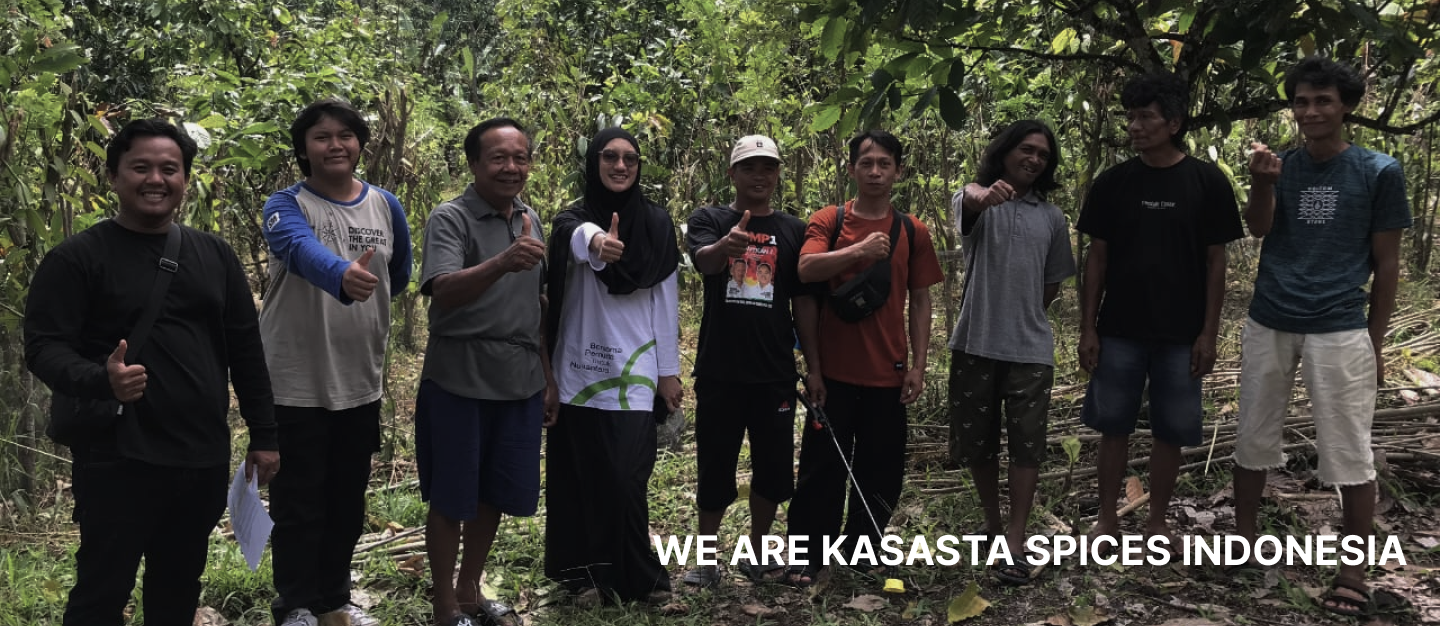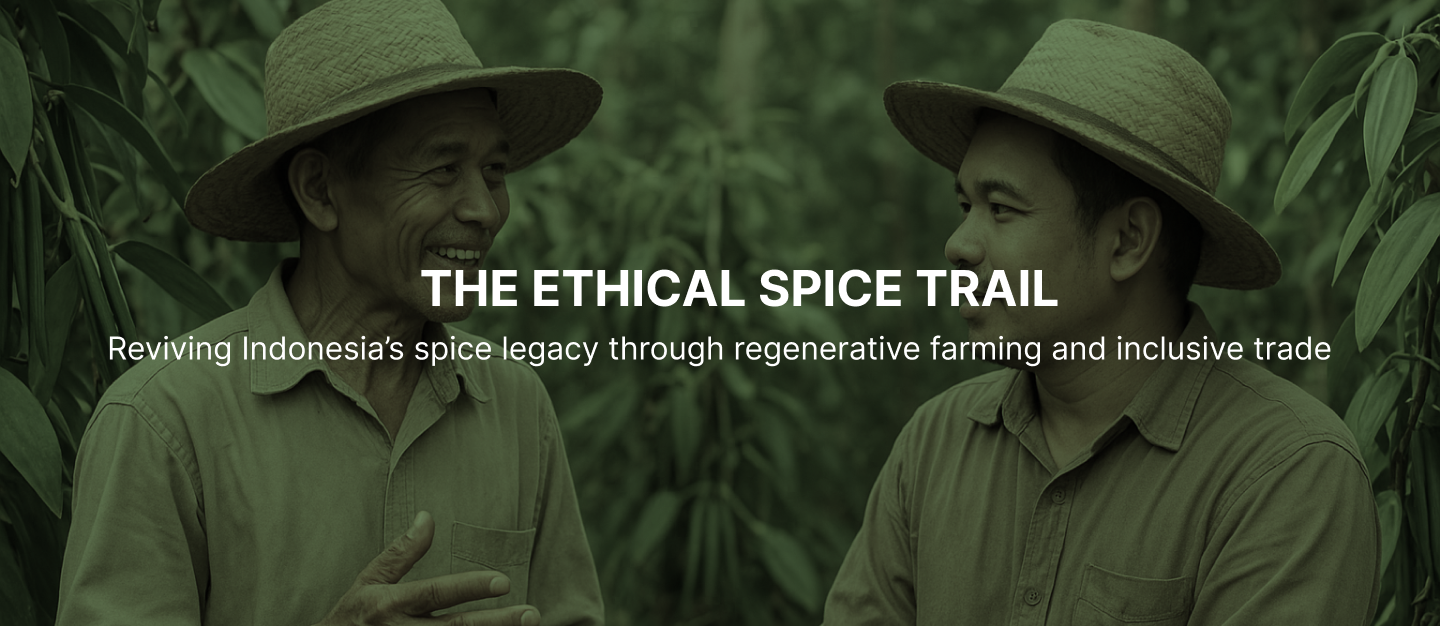
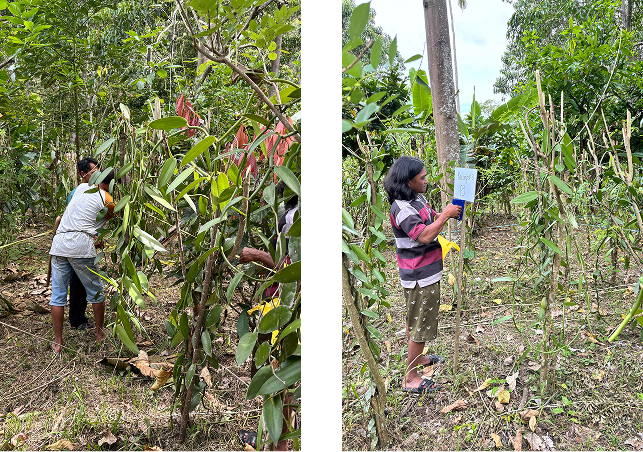
This is a responsible spice journey, reviving the glory of Indonesian spices in a way that empowers the land and its people.
Through regenerative agriculture, which enriches volcanic soil, and direct partnerships with farmers, we are creating a fair supply chain in which premium spice quality goes hand in hand with community well-being.
Each of our products is a step along this new spice trail, leading not only to global markets, but also to prosperity at home.
POTENCY WITH PURPOSE –
INDONESIA'S SPICE LEGACY REIMAGINED
For centuries, Indonesia's volcanic soil and tropical climate have produced some of the world's most potent spices. Vanilla pods contain 3.1% natural vanillin, cloves contain 85% eugenol and turmeric roots contain 95% curcuminoids. These are not just ordinary plants; they are the living legacy of the Spice Route, now reborn through our regenerative practices.
At Kasasta Rempah Nusantara, we honour this legacy by transforming these gifts from nature into modern treasures. Our nano-organic SRF fertiliser and state-of-the-art extraction equipment and formulations unlock potential that is unattainable by traditional methods: spices offering an unmatched aroma and clinically validated bioactive compounds. However, true sustainability also means caring for those who care for the land. That's why 100% of our vanilla and spices can be traced back to farming families in Sigi who now earn 40% higher incomes thanks to our direct partnerships.
This is the New Spice Trail: where every gram heals ecosystems, empowers communities and transforms the industry — from our soil to yours.
From Poverty to Prosperity:
Empowering Farmers with Knowledge and Fair Trade
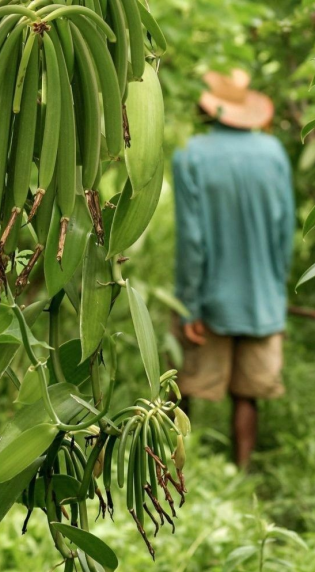
Although Indonesia is the second largest producer of vanilla in the world, the quality of vanilla produced by many small-scale farmers remains low due to premature harvesting.
This is due to widespread vanilla theft and a lack of guarantees regarding better prices, even when harvesting is done at full maturity. Consequently, the vanilla does not have optimal vanillin content and cannot undergo proper curing. Furthermore, many farmers lack knowledge of organic farming methods or of how to process vanilla into high-value derivative products, such as extracts. They only sell raw pods at low prices, with no added value.
This issue stems from poverty, limited access to technology and dependence on middlemen who prioritise quantity over quality.
KASASTA REMPAH NUSANTARA STEPS IN HERE, OFFERING ORGANIC FARMING TRAINING, HALAL VANILLA EXTRACTION TECHNOLOGY AND FAIR MARKET ACCESS TO IMPROVE FARMERS' WELL-BEING.
We believe that achieving sustainability requires the active involvement of farmers. The issues faced by vanilla farmers are complex. We therefore see them as equal partners in our value chain, not just suppliers.
Our inclusive business model is based on real-world conditions. By involving farmers in every step, from cultivation to post-harvest, we improve the quality of raw materials and enhance farmers' well-being.
This is how we build a sustainable future for spices: together, not alone.
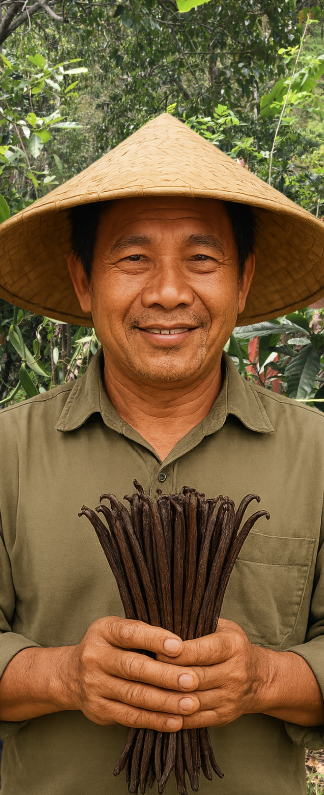
I’d like to address the issue of poverty among small-scale farmers in Indonesia
What Social Issue to Address
17.28 million small farmers in Indonesia live in poverty.
Sigi, where farmers make up 72.51% of the population, is one of the poorest regions in Indonesia
(ranked 4th poorest region in Central Sulawesi).
- Delayed vanilla bloom, reduced yields
- Too many smallholders selling low quality products
- Selling only vanilla without processing derivative products
Low prices can also reduce the incentive for farmers to continue growing vanilla. Many farmers are at risk of having to switch crops, which can have a negative impact on global supply.
Facts:
• Indonesia is the world's second largest vanilla producer after Madagascar.
• In 2019, Indonesia accounted for 28.8% of the world's total vanilla production.
Source: Indonesia Central Statistics Agency & Sigi Regency
I INTERVIEWED FARMER MR. HAIRUL & CONCLUDED THAT PROVIDING HIGH TECH TO GROW & PROCESS RAW MATERIALS IS ESSENTIAL TO ADDING VALUE
Problem Hypotheses
Interviewee Overview
- Farmer Mr. Hairul
- 38 yo/Male
- A small scale vanilla farmer in Sigi
- Cultivating vanilla on 4 acres of land for 8 years
- Mainly produces fresh vanilla bean
- Delays in vanilla flowering, reducing yields
- Struggling for primary needs of life and capital for farming
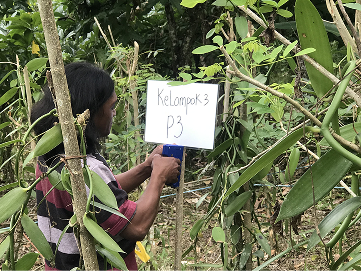

Result of your research
- Delayed flowering of vanilla plants, resulting in late harvest and low yields
- High cost of plant fertiliser/vitamins makes it difficult to implement solutions
- Fluctuations in the market price of fresh vanilla
- Farmers unable to produce superior vanilla-derived products cannot survive in the international market
Observation
- Farmer uses rice water as vitamin for vanilla plants → not enough nutrition
- Soil conditions have been used long time → poor nutrients
- Farmers sell only fresh vanilla without value-adding process
- Unaware of organic methods & processing vanilla-derived products
Findings
- Problem A: Lack of knowledge to make natural organic fertilisers/vitamins
- Problem B: Insufficient know-how for producing high quality vanilla-derived products
- Problem C: Lack of upfront capital for equipment & materials
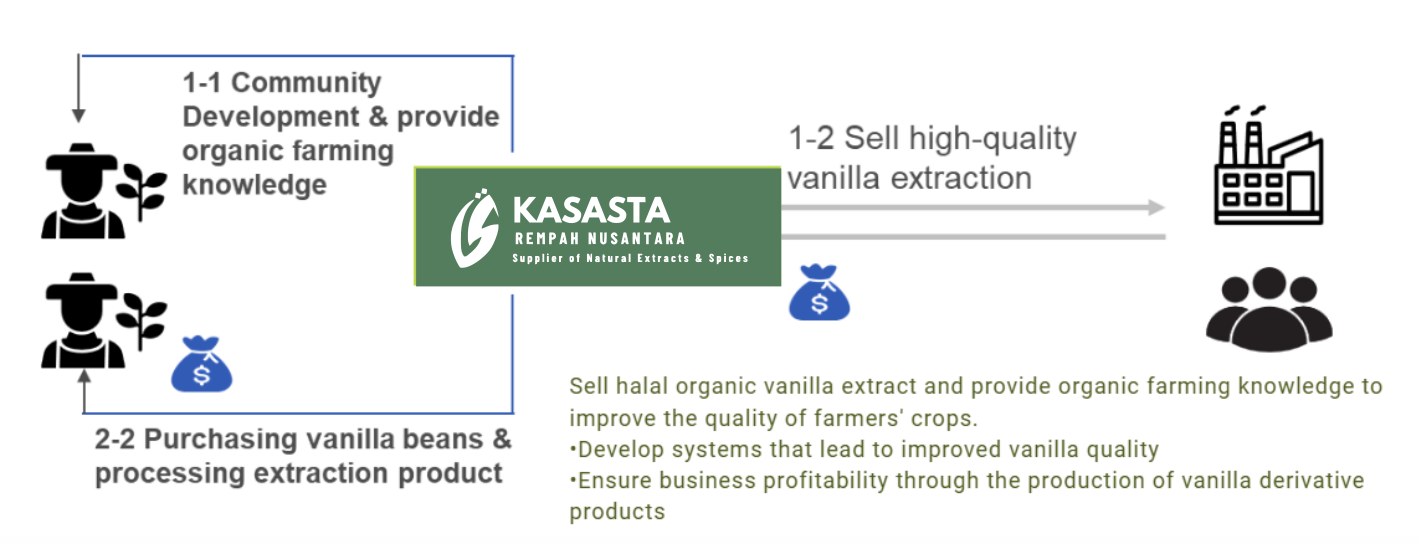

Collaboration method
Problem hypothesis → Action hypothesis
Problem A: Lack of knowledge to make natural organic fertilisers/vitamins
- Provide guidance on utilization of SRF Nano Organic Fertilizer
- Teach Know-how for growing & harvesting higher-quality and higher value of vanilla beans
Problem B: Insufficient know-how for producing high quality vanilla-derived product that can be sold at high prices
- Sell supercritical fluid halal organic vanilla extraction
- Improving the livelihoods of farmers in Sigi with purchasing organic vanilla beans at fair prices
- Being able to process & sell high quality of halal organic vanilla extraction
Problem C: Lack of upfront capital to purchase necessary equipment and materials
- Support the development of business plans to secure loans
- Difficult to secure loans when sale volumes are unstable with low quality products
- Explain that addressing Problem A & B will enable the stable production of high-quality products